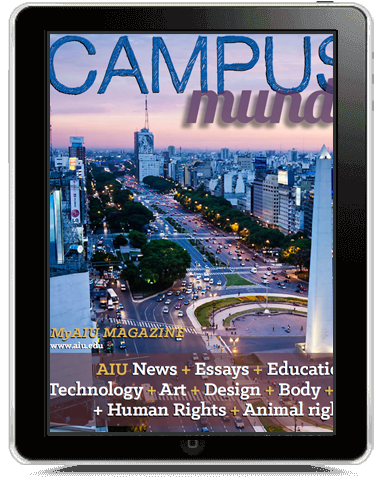

March 2021 Edition!
AIU News + Essays + Education + Culture + Science + Technology + Art + Design + Body + Mind + Spirit + Environment + Human Rights + Animal rights + Music + About AIU
Other Editions

AIU News + Essays + Education + Culture + Science + Technology + Art + Design + Body + Mind + Spirit + Environment + Human Rights + Animal rights + Music + About AIU
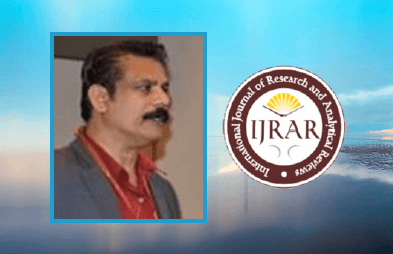 January
25, 2021.
One of our
graduates,
Dr.
Sivarajasingam
Mahendran
was selected to be a Review
Member of the International
Journal of Research and
Analytical Reviews (IJRAR) on
the 30th of October of 2020.
Dr. Siva found the quality and
standards adopted in their
reviews to be high (ISSN and
UGC Approved, 5.75 Impact Factor, refereed, peer reviewed
and indexed journal). He will
therefore be reviewing journal
articles from around the world
when he receives them from
now on.
Dr. Siva Mahendran has
completed a Doctorate program
in Education at Atlantic
International University.
January
25, 2021.
One of our
graduates,
Dr.
Sivarajasingam
Mahendran
was selected to be a Review
Member of the International
Journal of Research and
Analytical Reviews (IJRAR) on
the 30th of October of 2020.
Dr. Siva found the quality and
standards adopted in their
reviews to be high (ISSN and
UGC Approved, 5.75 Impact Factor, refereed, peer reviewed
and indexed journal). He will
therefore be reviewing journal
articles from around the world
when he receives them from
now on.
Dr. Siva Mahendran has
completed a Doctorate program
in Education at Atlantic
International University.
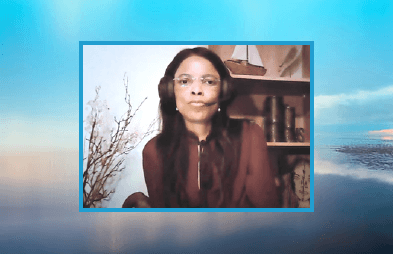 February 16, 2021. One of our
graduates, Karen Akwuobi,
uploaded a YouTube video
which is titled, “A Child nurtured
in early age”.
Description: The efficacy of
positive parenting function at
an early age. Parenting and it’s
scientific
correlation.
Children
whose
mothers
nurtured
them
early in
life have
brains with a larger hippocampus;
(a key brain structure
important to learning, memory
and stress response).
Find he video here:
https://www.youtube.com/
watch?v=oc9h9b0Vw7A
Karen Akwuobi has completed
a
Doctorate
program
in Clinical
Psychology
at
Atlantic
International
University.
February 16, 2021. One of our
graduates, Karen Akwuobi,
uploaded a YouTube video
which is titled, “A Child nurtured
in early age”.
Description: The efficacy of
positive parenting function at
an early age. Parenting and it’s
scientific
correlation.
Children
whose
mothers
nurtured
them
early in
life have
brains with a larger hippocampus;
(a key brain structure
important to learning, memory
and stress response).
Find he video here:
https://www.youtube.com/
watch?v=oc9h9b0Vw7A
Karen Akwuobi has completed
a
Doctorate
program
in Clinical
Psychology
at
Atlantic
International
University.
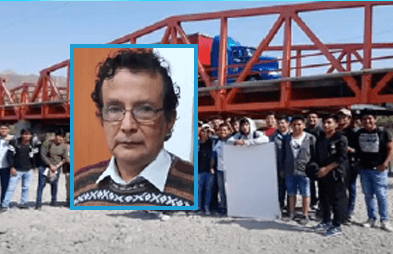 January 27,
2021. One of
our students,
Nicanor Williams
Pacheco
Huamán,
participated
in a Conference with the
company Stela Group where
he presented his seminar
“Puentes en Acero” where
he speaks about his projects,
curriculum, and more. The
seminar is available to watch
on YouTube.
Find the link to his
seminar here: https://www.
youtube.com/watch?v=OgCGtR_
ZlTg&feature=youtu.be
Nicanor Williams Pacheco
Huamán is completing a Doctorate
program in Mechanical
Engineering in Atlantic
International University.
January 27,
2021. One of
our students,
Nicanor Williams
Pacheco
Huamán,
participated
in a Conference with the
company Stela Group where
he presented his seminar
“Puentes en Acero” where
he speaks about his projects,
curriculum, and more. The
seminar is available to watch
on YouTube.
Find the link to his
seminar here: https://www.
youtube.com/watch?v=OgCGtR_
ZlTg&feature=youtu.be
Nicanor Williams Pacheco
Huamán is completing a Doctorate
program in Mechanical
Engineering in Atlantic
International University.
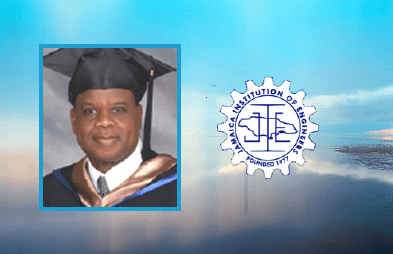 February
12, 2021. One
of our graduates,
Osbert
Grey, gained
full registration
to practice Architectural
Engineering
on account of:
1) His vast experience.
2) Validation by way of Degrees
from AIU.
He is also now a Corporate
Member of the Jamaica Institution
of Engineers (MJIE).
Osbert Grey has
completed a Master's
program in Civil
Engineering at Atlantic
International
University.
February
12, 2021. One
of our graduates,
Osbert
Grey, gained
full registration
to practice Architectural
Engineering
on account of:
1) His vast experience.
2) Validation by way of Degrees
from AIU.
He is also now a Corporate
Member of the Jamaica Institution
of Engineers (MJIE).
Osbert Grey has
completed a Master's
program in Civil
Engineering at Atlantic
International
University.
 AIU is proud to share with
you some videos about members
of our family. May you
enjoy and be inspired by them
AIU is proud to share with
you some videos about members
of our family. May you
enjoy and be inspired by them
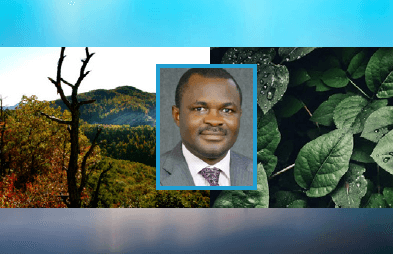 February 9,
2021. One of
our graduates,
James
Komolafe,
has published
two articles
with Nature News–Nurturing
a Living Environment.
1. “Leveraging Nature To
Create The Atmosphere You
Desire In 2021 And Beyond”.
Abstract: As we approach
the New Year, emphasis must
be placed on leveraging the
facilities of nature to create
the atmosphere of choice and
not just to settle for anything
available. Nature cooperates
with the natives who know!
So, let begin by ascertaining
what an atmosphere contains,
conveys and connect in order
to construct the ideal from the
obvious. Know and master
these 30 fundamentals about
the atmosphere and harmonize
with nature. ...
Find this first article here:
https://naturenews.africa/leveragingnature-
to-create-the-atmosphereyou-
desire-in-2021-and-beyond/
2. “Native with nature:
How to harmonize ‘nativity
with nature’ for optimal
productivity”.
Abstract: Nature is what
happens in us and around us
and for us as natives. Being
a native of a place means a
biological and physiological
existence finding and defining
an origin from a certain place.
As a matter of priority, we
all began from the ground by
nature as our origin. ...
Find this second article
here: https://naturenews.africa/native-
with-nature-how-to-harmonizenativity-
with-nature-for-optimalproductivity/
James Komolafe has completed
a Doctorate program in
Behavioral Health at AIU.
February 9,
2021. One of
our graduates,
James
Komolafe,
has published
two articles
with Nature News–Nurturing
a Living Environment.
1. “Leveraging Nature To
Create The Atmosphere You
Desire In 2021 And Beyond”.
Abstract: As we approach
the New Year, emphasis must
be placed on leveraging the
facilities of nature to create
the atmosphere of choice and
not just to settle for anything
available. Nature cooperates
with the natives who know!
So, let begin by ascertaining
what an atmosphere contains,
conveys and connect in order
to construct the ideal from the
obvious. Know and master
these 30 fundamentals about
the atmosphere and harmonize
with nature. ...
Find this first article here:
https://naturenews.africa/leveragingnature-
to-create-the-atmosphereyou-
desire-in-2021-and-beyond/
2. “Native with nature:
How to harmonize ‘nativity
with nature’ for optimal
productivity”.
Abstract: Nature is what
happens in us and around us
and for us as natives. Being
a native of a place means a
biological and physiological
existence finding and defining
an origin from a certain place.
As a matter of priority, we
all began from the ground by
nature as our origin. ...
Find this second article
here: https://naturenews.africa/native-
with-nature-how-to-harmonizenativity-
with-nature-for-optimalproductivity/
James Komolafe has completed
a Doctorate program in
Behavioral Health at AIU.
 February
5, 2021.
The World
Academy for
Research and
Development
in partnership
with Edu UK informed
AIU graduate, Isaac ZK Sasraku,
that he was qualified for
Certified Human Resource
Professional (CHRP). He is
now able to use the the title
CHRP after his name and they
also sent him a digital badge
and certificate.
Isaac ZK Sasraku completed
a Bachelor’s program in Human
Resources Management
at Atlantic International
University and is currently
enrolled in a Master’s Program
in Diplomacy and International
Relations.
February
5, 2021.
The World
Academy for
Research and
Development
in partnership
with Edu UK informed
AIU graduate, Isaac ZK Sasraku,
that he was qualified for
Certified Human Resource
Professional (CHRP). He is
now able to use the the title
CHRP after his name and they
also sent him a digital badge
and certificate.
Isaac ZK Sasraku completed
a Bachelor’s program in Human
Resources Management
at Atlantic International
University and is currently
enrolled in a Master’s Program
in Diplomacy and International
Relations.
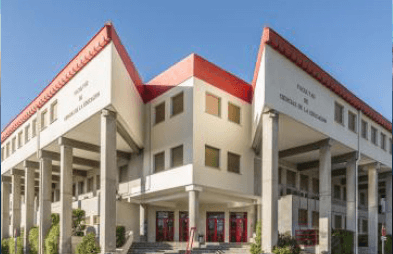 Call for Papers
This Conference will be held
26–28 January 2022
at University of Granada
(Faculty of Education),
Granada, Spain.
We invite proposals for paper
presentations, workshops/
interactive sessions, posters/
exhibits, colloquia, focused
discussions, innovation
showcases, virtual posters, or
virtual lightning talks.
2022 Special Focus:
“Post-Pandemic Sustainability:
Towards a green economic
recovery for nature, people
and planet”
Theme 1: Ecological realities.
Theme 2: Participatory process.
Theme 3: Economic, social and
cultural context.
Theme 4: Education, assessment
and policy.
Become a Presenter:
1. Submit a proposal
2. Review timeline
3. Register
Advance proposal deadline
26 Mar 2021
Advance registration deadline
26 Apr 2021
Visit the website:
https://onsustainability.com
Call for Papers
This Conference will be held
26–28 January 2022
at University of Granada
(Faculty of Education),
Granada, Spain.
We invite proposals for paper
presentations, workshops/
interactive sessions, posters/
exhibits, colloquia, focused
discussions, innovation
showcases, virtual posters, or
virtual lightning talks.
2022 Special Focus:
“Post-Pandemic Sustainability:
Towards a green economic
recovery for nature, people
and planet”
Theme 1: Ecological realities.
Theme 2: Participatory process.
Theme 3: Economic, social and
cultural context.
Theme 4: Education, assessment
and policy.
Become a Presenter:
1. Submit a proposal
2. Review timeline
3. Register
Advance proposal deadline
26 Mar 2021
Advance registration deadline
26 Apr 2021
Visit the website:
https://onsustainability.com
 SUMMA CUM LAUDE
 CUM LAUDE
 CUM LAUDE
 CUM LAUDE
 CUM LAUDE
 CUM LAUDE
 CUM LAUDE
 CUM LAUDE
 CUM LAUDE
 CUM LAUDE
| José Caetano Gomes Bache lor of Science Public Health Angola |
Nicolau Londe Gomes Miguel Bache lor of Business Administration Business Administration Angola |
Joao Arceno Mendes Bache lor of Science Industrial Enginee ring Angola |
Lisandro Martínez Bovier Bache lor of Science Systems Enginee ring Argentina |
María Cristina Ferrari Doctor of Science Public Health Argentina |
Elizabeth Maria Barr Clyde Bache lor of Business Administration Business Administration Management Bahamas |
| Tina Dianna Forbes-Rasmussen Ass ociate of Science Public Health and Nutrition Bahamas |
Osmin Kevin Sarceno Bache lor of Science Civil Enginee ring Belize |
Alejandro Valeriano Ruiz Bache lor of Science Electrical Enginee ring Bolivia |
Moanamisi Tawana Bache lor of Science Civil Enginee ring Botswana |
Abiyah Coretta Esango Epse Mimba Doctor of Business Administration Human Resources Cameroon |
Alain J Painchaud Doctor of Physics Modern The rmodynamics of Sys. of V. S. Canada |
| Walter Mauricio Flores Véliz Bache lor of Science Geology Chile |
Chestin Tatiana Carstens Vásquez Doctor of Education Education Chile |
Maribel Diaz Isaza Bache lor of Science Civil Enginee ring Colombia |
Oscar Alejandro Lopera Calle Doctor of Education Education Colombia |
Yhonatan Estiben Batero Agudelo Bache lor of Science Mechanical Enginee ring Colombia |
Dominique Bagula Burume Matière Bache lor of Business Administration Business and Management Democratic Rep ublic of Congo |
| Andy Numbi Ngoy Doctor of Science Microbiology Democratic Rep ublic of Congo |
Kasongo Nguba Joseph Doctor of Philosoph y Project and Financial Management Democratic Rep ublic of Congo |
Kiwa Wane Papy Doctor of Philosoph y Project and Financial Management Democratic Rep ublic of Congo |
Daniel Elías Robles Robinson Bache lor of Computer Science Information Security Dominican Rep ublic |
Ángela del Carmen Espinal Veras Doctor of Human Res ources Human Resources Dominican Rep ublic |
Angel Gilberto Peña de la Rosa Bache lor of Science Civil Enginee ring Dominican Rep ublic |
| Roque Juan Nuñez Bache lor of Education Educational Psychology Dominican Rep ublic |
Cristian Perdomo Hernández Doctor of Political Science Electoral Studies Dominican Rep ublic |
Juan Fabrizio Tirry Doctor of Education Scientific Investigation Methodology Dominican Rep ublic |
Ana Manuela Palma Avellán Doctor of Business Administration Business Administration Ecuador |
Jose Antonio Huerta Nivelo Bache lor of Science Animal Science Ecuador |
Ester Carolina Robles Veliz Bache lor of Science Nutrition, Diet and Aesthe tics Ecuador |
| Juan José Owono Okiri Nkoho Master of Science Public Health Equatorial Guinea |
Javier Nguema Onguene Bache lor of International Relations International Relations Equatorial Guinea |
Mark Yaw Taylor Master of Business Administration Business Administration France |
Mayra Elizabeth Santizo Galdamez Bache lor of Science Civil Enginee ring Guatemala |
Pedro Luis Flette Eastsan Bache lor of Physics Physics Guatemala |
Amadita Pinzón Almendra Bache lor of Science Psychology Guatemala |
| Juan Carlos Valdez Sandoval Post-Doctorate of Business Administration Business Administration Guatemala |
Harouna Traore Certificate Certificate of Management Guinea |
Nadine McIntosh-Ramsarran Doctor of Philosoph y Clinical Psychology Guyana |
Rocheny Sifrain Doctor of Philosoph y Finance Haiti |
Pierre Bernadin Jean Laurent Bache lor of Communications Communications Haiti |
Rosa Elena España Portillo Bache lor of Science Information Technology Honduras |
| Malcom Josue Bonilla Reyes Bache lor of Science Psychology Honduras |
Eva Celestina Fernandez Rodriguez Bache lor of Science Civil Enginee ring Honduras |
V.V.L.N. Sastry Post-Doctorate of Economics Economics India |
Isaac Devakumar Doctor of Philosoph y Mathe matics India |
Claudia P. Barrientos Cámbara de Pérez Master of Intl. Business Management Economic Development Coope ration Italy |
Mahvell Neisha-Lois Charlton-Brown Doctor of Philosoph y App lied Linguistics Jamaica |
| Dennis Gachamba Bache lor of Science Information Technology Kenya |
Stella Adhiambo Agara Bache lor of Science International Relations and Diplomacy Kenya |
Mark Mungai Ng'ang'a Doctor of Philosoph y Educational Administration Kenya |
Badriya AlGhanim Bache lor of Accounting Accounting Kuwait |
Norma Hajj Bache lor of Education Education Kuwait |
Eric Filor Nagbe Doctor of Philosoph y Accounting Liberia |
| Mohamed Bah Bache lor of Business Administration Business Administration Liberia |
Trokon Rockefeller Jackson Doctor of Philosoph y Education Leadership Management Liberia |
Arthur T. Johnson Doctor of Philosoph y Legal Studies Liberia |
Aaron Austin Phiri Master of Science Public Health Malawi |
Kone Djakalia Bache lor of Business Administration Business Management Mali |
Harouna Traore Master of International Relations Business and Economics Mali |
| Víctor M. Leonardo Gudiño González Doctor of Architecture Urbanism Mexico |
Ramón Alejandro Orozco Meráz Master of Social and Human Studies Spirituality Mexico |
María Lourdes Díaz González Borja Doctor of Education Education Mexico |
Shittu Sheriff Bamidele Bache lor of Science Industrial Enginee ring Nigeria |
Joseph Magaji Azi Doctor of Business Administration Public Financial Management Nigeria |
Nwose, Raymond Chukwuneku Bache lor of Science Electrical Enginee ring Nigeria |
| Adepoju Adeyinka Adebayo Master of Science Mechanical Enginee ring Nigeria |
Onazi Enyi Moses Doctor of Philosoph y International Health Nigeria |
James Iorchir Demenongu Demshakwa Doctor of Science Architecture Nigeria |
Essien, Essien Lawrence Master of Science Public Health Nigeria |
Silvia Osaigbovo Tagbo-Okeke Doctor of Philosoph y Project Management Nigeria |
Matthew Omovidolor Ebireri Doctor of Safety and Risk Management Safety and Risk Management Nigeria |
| Anju Ganglani Master of Education Educational Psychology Nigeria |
Obaroh, Rebbecca Yemi Bache lor of Human Res ources Human Resources Nigeria |
Emmanuel Iornenge Chenge Doctor of Human Res ources Human Resources Nigeria |
James Komolafe Doctor of Philosoph y Beh avioral Health Nigeria |
Chukwu Raymond Emeka Doctor of Business Management Business Management Nigeria |
Bashir Abdulmumin Ass ociate of Science Civil Enginee ring Nigeria |
| Folasade Adunni Coker Doctor of Taxation Taxation Nigeria |
Ogbuti Godfrey Emeka Doctor of Philosoph y Criminology Nigeria |
Adedoyin Adeola Olubunmi Doctor of Science Telecommunications Nigeria |
Ysahaq Gebrechristos Bache lor of Science Computer Science Norway |
Osvaldo Abiud Díaz Torres Bache lor of Science Civil Enginee ring Panama |
Emiliano Ríos Vega Doctor of Tourism Tourism Panama |
| Roberto Molinar Ríos Doctor of Accounting Accounting and Comptroller Panama |
Alphonse Kee Domki Ali Master of Economics Strategic Management Papua New Guinea |
Ramiro Concha Lopez Bache lor of Science Civil Enginee ring Peru |
Santos Ricardo Tarazona Maza Master of Science Civil Enginee ring Peru |
Harold Edward Arce Espinoza Bache lor of Business Administration Business Administration Peru |
Cary Hermo Beatisula Doctor of Philosoph y Geotechnical Enginee ring Philipp ines |
| Theresa McDermott Santiago Master of Human Res ources Human Resources Puerto Rico |
Theresa McDermott Santiago Doctor of Philosoph y Gerontology Puerto Rico |
Sheila Montes Peña Doctor of Education Educational Administration Puerto Rico |
Luis Mariano Crespo Ortiz Doctor of Education Education Puerto Rico |
Edil G. Trabal Lebrón Doctor of Science Public Health Puerto Rico |
Elizabeth Torres Alvarado Doctor of Business Administration International Business Puerto Rico |
| Peter Echesirim Anozie Doctor of Arts Sociology Russ ia |
Felix Ideva Bache lor of Business Administration Project Management Senegal |
Michelle Louise Parkin Doctor of Science Nutrition South Africa |
Lungani Philemon Khwetshube Certificate of Social and Human Studies Legal Studies South Africa |
Jaqueline Koning Doctor of Business and Economics International Human Rights South Africa |
Robert Regnard Bache lor of Arts Business Management South Africa |
| Nadine Badenhorst Bache lor of Science International Trade South Africa |
James Ajuong Arou Doctor of Science Business Administration and Management South Sudan |
Bastiyan K. A. Manisha Sweene Rodrigo Doctor of Philosoph y Business Administration Sri Lanka |
Navin Riteshkumar Ruben Samoedj Doctor of Human Res ource Management Human Resource Management Suriname |
Shalinie Ramotar Bache lor of Science Che mical Enginee ring Suriname |
Ijeoma Lauretha Madumere Bache lor of Business Administration Business Management Switzerland |
| Shaban Ramadhani Bache lor of Proje ct Management Project Management Tanzania |
Ayse Serra Yücel Bache lor of Science Nutrition Science Turkey |
Hussein Omar Hussein Bache lor of Management Project Management Uganda |
Muleebwa Joseph Bache lor of Science Public Health Uganda |
Norbert Hakisimana Atanyo Konga Doctor of Legal Studies Social Sciences United Kingdom |
Sharderzer Harper Bache lor of Legal Studies Legal Studies USA |
| Leonardo C. L. Dias Bache lor of Business Administration International Business Management USA |
Mark Jose Gonzales Doctor of Business Administration Business Administration USA |
Franco Egbe Master of Science Civil Enginee ring USA |
Luis Miguel Gonzalez Lugo Bache lor of Science Information Technology Venezuela |
Christine Lubasi Mwanambuyu Doctor of Philosoph y Linguistics Zambia |
Mathews Allan Chilapa Bache lor of Science Electrical Enginee ring Zambia |
| Itai Andrew Mawonde Master of Business Administration Business Administration Zimbabwe |
Gabriel Kabanda Post-Doctorate of Science Computer Science Zimbabwe |
||||
Introduction
Basic research and excellent
academic presentation will
always be the work of contemporary
scholars as it enables
them to properly critique and
possibly analyzed past and
present issues of complexity
and thus, provide amicable solutions
to critical issues to save
the incoming generations.
When people opt for change,
it is obvious that such change is
aimed at correcting the wrongs
of the past. In ancient past, generation
upon generation did not
experience technological skill
and advancement as modern
epoch does. This is due to the
level of advance education we
have today.
According to Wikipedia,
Education is however the
process of facilitating learning,
or the acquisition of knowledge,
skills values, beliefs, and
habits. Educational methods
include teaching, training,
storytelling, discussion and
directed research. Education
frequently takes place under
the guidance of educators,
however learners can also
educate themselves. Education
can take place in formal
or informal settings and any experience that has a formative
effect on the way one
thinks, feels, or acts may be
considered educational.
A right to education has
been recognized by some
governments and the United
Nations. In most regions,
education is compulsory up to
a certain age. There is a movement
for education reform,
and in particular for evidencebased
education with global
initiatives aimed at achieving
the Sustainable Development
Goal 4, which promotes quality
education for all.
Education began in prehistory,
as adults trained the
young in the knowledge and
skills deemed necessary in
their society. In pre-literate
societies, this was achieved
orally and through imitation.
Story-telling passed knowledge,
values, and skills from
one generation to the next.
As cultures began to extend
their knowledge beyond skills
that could be readily learned
through imitation, formal
education developed. Schools
existed in Egypt at the time of
the Middle Kingdom.
Plato founded the Academy
in Athens, the first institution
of higher learning in Europe.
The city of Alexandria in
Egypt, established in 330 BCE,
became the successor to Athens
as the intellectual cradle
of Ancient Greece. There, the
great Library of Alexandria
was built in the 3rd century
BCE. European civilizations
suffered a collapse of literacy
and organization following the
fall of Rome in CE 476.
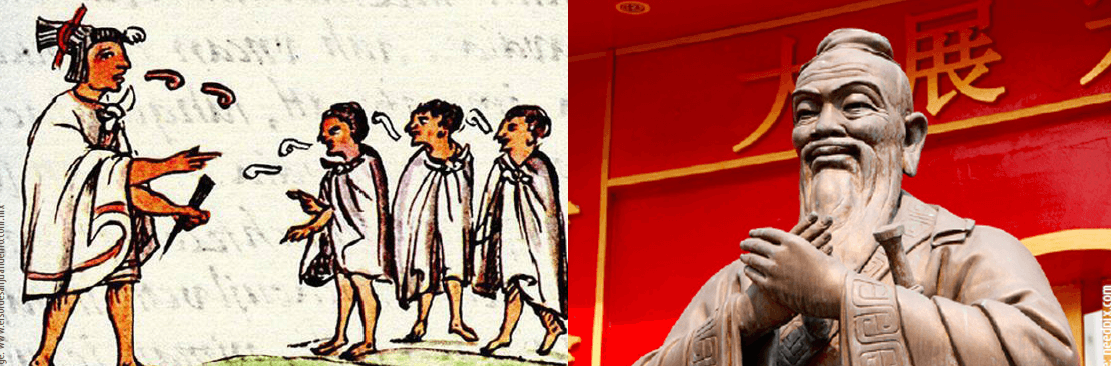
In China, Confucius
(551–479 BCE), of the State of
Lu, was the country’s most
influential ancient philosopher,
whose educational outlook
continues to influence the societies
of China and neighboring
Korea, Japan, and Vietnam.
Confucius gathered disciples
and searched in vain for a ruler
who would adopt his ideals
for good governance, but his
Analects were written down by
followers and have continued
to influence education in East
Asia into the modern era.
The Aztecs also had a welldeveloped
theory about education,
which has an equivalent
word in Nahuatl called tlacahuapahualiztli.
It means “the
art of raising or educating a
person”, or “the art of strengthening
or bringing up men”. This
was a broad conceptualization
of education, which prescribed
that it begins at home, supported
by formal schooling, and
reinforced by community living.
Historians cite that formal
education was mandatory for
everyone regardless of social
class and gender. There was
also the word neixtlamachiliztli,
which means “the act of giving
wisdom to the face”. In essence, these concepts
underscore a complex set of
educational practices, which
was oriented towards communicating
to the next generation
the experience and intellectual
heritage of the past for the
purpose of individual development
and his integration
into the community.
In the quest to foster and
direct the full development
of the human personality
and to the strengthening of
respect for human rights and
fundamental freedoms toward
individual integration into
the community, a means to
promote national and global
coherence, the document on
the Universal Declaration of
Human right was adopted on
Friday, December 10, 1948 in
Paris, France.
This which means all men
are equal and must have freedom
to exercise their inherent
and inalienable rights. The
right to live, to peace including
the human right to education.
Upon this backdropped, this
article derives from a more
concern with the contemporary
global situation of
education as a human right
that should be considered a
fundamental global priority.
It places major emphasis on
the human right to education,
a means to derive a
healthy planet as enshrined
in the charter of the Universal
Declaration of Human Rights.
It delves into the past only
because otherwise, it would be
highly impossible to understand
how the present came
into being and what the trends
are like for the near future. In
the search for an understanding
of what is education and
what makes it a fundamental
human right, the limits of
enquiry had to be fixed as far
back at the 3rd century BCE on
the one hand, and the twenty
first century on the other hand.
Background
According to Wikipedia,
Education is however the
process of facilitating learning,
or the acquisition of knowledge,
skills, values, beliefs, and
habits. Educational methods
include teaching, training,
storytelling, discussion and
directed research. Education
frequently takes place under
the guidance of educators,
however learners can also
educate themselves. Education
can take place in formal
or informal settings and any
experience that has a formative
effect on the way one
thinks, feels, or acts may be
considered educational.
A right to education has been
recognized by some governments
and the United Nations.
In most regions, education is
compulsory up to a certain
age. There is a movement
for education reform, and in
particular for evidence-based
education with global initiatives
aimed at achieving the
Sustainable Development Goal
4, which promotes quality education
for all.
Education began in prehistory,
as adults trained the
young in the knowledge and
skills deemed necessary in
their society. In pre-literate
societies, this was achieved
orally and through imitation.
Story-telling passed knowledge,
values, and skills from
one generation to the next.
As cultures began to extend
their knowledge beyond skills
that could be readily learned
through imitation, formal
education developed. Schools
existed in Egypt at the time of
the Middle Kingdom.
Plato founded the Academy
in Athens, the first institution
of higher learning in Europe.
The city of Alexandria in
Egypt, established in 330 BCE,
became the successor to Athens
as the intellectual cradle
of Ancient Greece. There, the
great Library of Alexandria
was built in the 3rd century
BCE. European civilizations
suffered a collapse of literacy
and organization following the
fall of Rome in CE 476.
In China, Confucius
(551–479 BCE), of the State of
Lu, was the country’s most influential
ancient philosopher,
whose educational outlook
continues to influence the societies
of China and neighboring
Korea, Japan, and Vietnam.
Confucius gathered disciples
and searched in vain for a
ruler who would adopt his
ideals for good governance,
but his Analects were written
down by followers and
have continued to influence
education in East Asia into the
modern era.
After the Fall of Rome,
the Catholic Church became
the sole preserver of literate
scholarship in Western Europe.
The church established
cathedral schools in the Early
Middle Ages as centres of
advanced education. Some of
these establishments ultimately
evolved into medieval
universities and forebears
of many of Europe’s modern
universities. During the High
Middle Ages, Chartres Cathedral
operated the famous and
influential Chartres Cathedral
School. The medieval universities
of Western Christendom
were well-integrated
across all of Western Europe,
encouraged freedom of inquiry,
and produced a great
variety of fine scholars and
natural philosophers, including
Thomas Aquinas of the
University of Naples, Robert
Grosseteste of the University
of Oxford, an early expositor
of a systematic method of
scientific experimentation,
and Saint Albert the Great,
a pioneer of biological field
research. Founded in 1088,
the University of Bologne is
considered the first, and the
oldest continually operating
university. Elsewhere during the Middle
Ages, Islamic science and
mathematics flourished under
the Islamic caliphate which
was established across the
Middle East, extending from
the Iberian Peninsula in the
west to the Indus in the east
and to the Almoravid Dynasty
and Mali Empire in the south.
In most countries today,
full-time education, whether
at school or otherwise, is compulsory
for all children up to
a certain age. Due to this the
proliferation of compulsory
education, combined with
population growth, UNESCO
has calculated that in the next
30 years more people will receive
formal education than in
all of human history thus far.
Formal education occurs
in a structured environment
whose explicit purpose is
teaching students. Usually,
formal education takes place
in a school environment with
classrooms of multiple students
learning together with
a trained, certified teacher of
the subject.
The International Standard
Classification of Education
(ISCED) was created by UNESCO
as a statistical base to compare
education systems. In
1997, it defined 7 levels of education
and 25 fields, though
the fields were later separated
out to form a different project.
Modern educational program
begins from the early childhood
level, primary, secondary
and higher education as well
as vocational education1.
Content of the
right to education
Indeed, the right to education
encompasses both entitlements
and freedoms, including
the following:
• Right to free and compulsory
primary education.
• Right to available and accessible
secondary education
(including technical and
vocational education and
training), made progressively
free.
• Right to equal access to
higher education on the
basis of capacity made progressively
free.
• Right to fundamental
education for those who
have not received or completed
primary education.
• Right to quality education
both in public and private
schools.
• Freedom of parents to
choose schools for their
children which are in conformity
with their religious
and moral convictions.
• Freedom of individuals
and bodies to establish and
direct education institutions
in conformity with minimum
standards established
by the state.
• Academic freedom of teachers
and students2.
There were 4As developed by
the first UN Special Rapporteur
on the right to education,
and adopted by the Committee
on Economic, Social and
Cultural Rights in its General
Comment 13 on the right to
education (1999, para.6). These
4As indicate that education
should be available, accessible,
acceptable and adaptable. To
be a meaningful right, education
in all its forms and at all
levels shall exhibit these interrelated
and essential features:
Available– Education is
free and there is adequate
infrastructure and trained
teachers able to support the
delivery of education.
Accessible– The education
system is non-discriminatory
and accessible to all, and positive
steps are taken to include
the most marginalized.
Acceptable– The content of
education is relevant, nondiscriminatory
and culturally
appropriate, and of quality;
schools are safe, and teachers
are professional.
Adaptable– Education
evolves with the changing
needs of society and challenges
inequalities, such as gender
discrimination; education
adapts to suit locally specific
needs and contexts
Obligation of states
to education as a
human right:
States are therefore under
obligations to respect, protect,
and fulfil this right.
To respect means to refrain
from interfering with the enjoyment
of the right (e.g., the
state must respect the liberty
of parents to choose schools
for their children.
To protect means to prevent
others from interfering
with the enjoyment of the
right usually through regulation
and legal guarantees
(e.g., the state must ensure
that third parties, including
parents, do not prevent girls
from going to school).
To fulfil means to adopt
appropriate measures towards
the full realization of the right
to education (e.g., the state
must take positive measures to
ensure that education is culturally
appropriate for minorities
and indigenous peoples,
and of good quality for all).
However, no matter how
limited resources are, all states
have immediate obligations
to implement the following
aspects of right to education:
1. Ensure minimum core obligations
to meet the essential
levels of the right to education,
which includes prohibiting
discrimination in access
to and in education, ensuring
free and compulsory primary
education for all, respecting
the liberty of parents to choose
schools for their children other
than those established by
public authorities, protecting
the liberty of individuals and
bodies to establish and direct
educational institutions.
2. Take appropriate steps
towards the full realization
of the right to education to
the maximum of its available
resources. A lack of resources
cannot justify inaction or
indefinite postponement of
measures to implement the
right to education. States
must demonstrate they are
making every effort to improve
the enjoyment of the
right to education, even when
resources are scarce.
3. Not take retrogressive
measures. This means that the
state should not take backwards
steps or adopt measures
that will repeal existing
guarantees of the right to
education. For instance, introducing
school fees in secondary
education when it had
formerly been free of charge
would constitute a retrogressive
measure4.
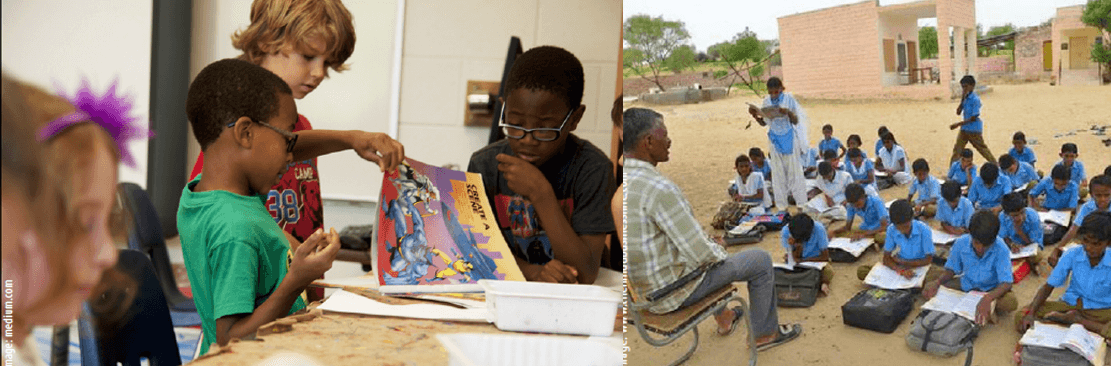
Education is not
a privilege.
Human Rights Day is observed
on December 10 of each
year in recognition of the adoption
of the Universal Declaration
of Human Rights, which
set outs fundamental human
rights, including education,
to be universally protected. It
was on Friday, December 10,
1948 that the United Nations
General Assembly adopted the
declaration that proclaimed
the inalienable rights which
everyone is inherently entitled
to as a human being, regardless
of race, religion, sex, language,
political opinion, national or
social origin, property, birth or
other status5.
Referencing the above declaration
that seems to be one
of the most translated documents
in the world —available
in more than 500 language—,
means education is a
human right and not a
privilege. Education as a
human right means:
• The right to education is
legally guaranteed for all
without any discrimination.
• States have the obligation
to protect, respect, and fulfil
the right to education.
• There are ways to hold states
accountable for violations or
deprivations of the right to
education.
 Education
as a human right
Today, human rights are
inherent to all human beings,
regardless of nationality, sex,
national or ethnic origin, color,
religion, language, or any
other status. They cannot be
given or taken away. Human
rights are the foundation for
freedom, justice and peace in
the world. They are formally
and universally recognized
by all countries in the Universal
Declaration on Human
Rights (1948, UDHR). Since the
adoption of the UDHR, many
treaties have been adopted by
states to reaffirm and guarantee
these rights legally.
International human rights
law sets out the obligations
of states to respect, protect,
and fulfil human rights for
all. These obligations impose
specific duties upon states,
regardless of their political,
economic, and cultural
systems. All human rights
are universal, indivisible,
interdependent, and interrelated
(Vienna Declaration
and Program of Action, 1993,
para. 5). Equality and nondiscrimination
are foundational
and cross-cutting
principles in international
human rights law. This means
that all human rights apply to
everyone.
Education
as a human right
Today, human rights are
inherent to all human beings,
regardless of nationality, sex,
national or ethnic origin, color,
religion, language, or any
other status. They cannot be
given or taken away. Human
rights are the foundation for
freedom, justice and peace in
the world. They are formally
and universally recognized
by all countries in the Universal
Declaration on Human
Rights (1948, UDHR). Since the
adoption of the UDHR, many
treaties have been adopted by
states to reaffirm and guarantee
these rights legally.
International human rights
law sets out the obligations
of states to respect, protect,
and fulfil human rights for
all. These obligations impose
specific duties upon states,
regardless of their political,
economic, and cultural
systems. All human rights
are universal, indivisible,
interdependent, and interrelated
(Vienna Declaration
and Program of Action, 1993,
para. 5). Equality and nondiscrimination
are foundational
and cross-cutting
principles in international
human rights law. This means
that all human rights apply to
everyone.
Education is paramount
to the existence of all men.
This is why in the wisdom of
the crafters of the Universal
Declaration on Human Rights,
they indicated in that sacred
document as in article 26, section
one to three that:
1. Everyone has the right to
education. Education shall
be free, at least in the elementary
and fundamental
stages. Elementary education
shall be compulsory.
Technical and professional
education shall be made
generally available and
higher education shall be
equally accessible to all on
the basis of merit.
2. Education shall be directed
to the full development of
the human personality and
to the strengthening of respect
for human rights and
fundamental freedoms. It
shall promote understanding,
tolerance and friendship
among all nations,
racial or religious groups, and shall further the activities
of the United Nations for
the maintenance of peace.
3. Parents have a prior right to
choose the kind of education
that shall be given to their
children.
This simply supports the fact
that Education is considered
a fundamental human right
because it allows individuals to
exercise all their rights especially
the right to read, write,
comprehend and confront
issues of complexity thereby deriving
amicable solutions. Being
illiterate means not being able
to find directions to take a bus,
understand the label on a medication
bottle, help your child
with homework, read programs
of political candidates and cast
an informed vote etc., but being
educated gives the creates the
ambiance to positively attend or
affect these duties.
A basic education is important
to ensure that all individuals
are aware of their rights.
Without an education it is less
likely to get a good-paying job
and decent housing, participate
in the democratic process
or value education for future
generations. There is evidence
that educated citizens care more
about the environment, they are
more tolerant of others who are
not like them, and are more likely
to strive for gender equality.
In furtherance, education is
therefore a fundamental human
right because:
> It is important in the
creation of any democratic society.
As Franklin D. Roosevelt
puts it that, “Democracy
cannot succeed unless those
who express their choice are
prepared to choose wisely. The
real safeguard of democracy,
therefore, is education.” People
need a good education if they
want a good democracy.
> It is needed to make a
society geopolitically stable.
Without a proper educational
system available to everyone,
terrorists could use free
education as a way to radicalize
people. In other words,
geopolitical stability is one of
education’s most powerful effects
on society.
> It leads to economic prosperity
in the global marketplace.
This means that, one of the
most important effects education
has on society is giving the
people who live in a society
the skills they need to compete
in the global marketplace, and
the skills they need to produce
technological goods that can be
sold on the open market. That
is why the Athenian Philosopher,
Socrates best expressed
this idea when he stated that:
“Prefer knowledge to wealth,
for the one is transitory, the
other perpetual.”
> It gives people the
knowledge they need to elect
capable leaders. Plato was
never wronged when he stated
that, “In politics we presume
that everyone who knows how
to get votes knows how to administer
a city or a state. When
we are ill… we do not ask for
the handsomest physician, or
the most eloquent one.” Education
helps the members of society
see through the manipulations
used by politicians to
get votes so that the members
of the society can vote for the
leader who is best able to run
the society.
> It helps promote tolerance
in a society and helps reduce
common conflicts between diverse
populations in an urban
setting. In the words of Helen
Keller “The highest result of
education is tolerance.” Educating
members of society about
other people who either live in
the society or its neighboring
states have the power to reduce
many conflicts.
> It has the propensity to
help societies, and the world
in general, change for the
better. In the wisdom of the
greatest African freedom
fighter Nelson Mandela,
“Education is the most powerful
weapon which you can use
to change the world. Malcolm
X says that: “Education is the
passport to the future, for tomorrow
belongs to those who
prepare for it today.” Education
is a powerful tool that can
be used to make the world a
better place to live in.
> It helps members in a
society learn from the mistakes
of the past. That was the
reason for which the ancient
Greek Philosopher Plato has
stated that geopolitical stability
cannot be created by forming
a democratic government;
if the government is established
by force or because of
overthrowing an old regime,
the new government could
transform from a government
that encourages peace
and democracy into a new
government that uses force to
maintain power.
> It reduces violence and
crime in societies. Teaching
people to read has been shown
to prevent people from engaging
in crime. In fact, the Melissa
Institute for Violence Prevention
and Treatment is a charity
group that uses education to
combat violence and crime.
> It creates hope for the
future. In reality, providing
people the hope that they can
improve their lot in life is one
of the more powerful effects
education has on a society.
As postulated by the former
United States President, John
F. Kennedy when he best
expressed the power of a good
education system thereby saying,
“Let us think of education
as the means of developing
our greatest abilities, because
in each of us there is a private
hope and dream which,
fulfilled, can be translated
into benefit for everyone and
greater strength for our nation.”
These words of John F. Kennedy
about America apply to
every society on Earth today.
> It closes the gender gap.
For many years, women were
not allowed to attend school
or obtain an education. Because
of this, there is a large
gender gap, which only creates
further problems. Women
who gain an education are
working toward minimizing
the gap to further the abilities
of women around the world.
An education often prevents
young girls from being married
off into a potentially
limiting, harmful situation.
Additionally, women with an
education are able to make
better, informed decisions for
themselves. They often wait
longer to have children than
those who do not have an
education. This ensures that
the woman is ready to have
children, rather than just being
pressured into it by her
husband or society. Women
with an education have on
average three children, while
uneducated women have on
average seven children to ten
children from my country’s
(Liberia) perspective6.
Education should be
considered a fundamental
global priority
Both individuals and society
benefit from the right to
education. It is fundamental
for human, social, and economic
development and a key
element to achieving lasting
peace and sustainable development.
It is a powerful tool in
developing the full potential
of everyone and ensuring human
dignity, and in promoting
individual and collective
wellbeing. It is therefore an
empowerment right that lifts
marginalized groups out of
poverty. It is an indispensable
means of realizing other rights
as it contributes to the full
development of the human
personality7.
Recommendation:
To maintain the continuous
flow of education as a
fundamental human right,
and to further realize and
promote the right to education,
I am pleased to posit
the following recommendations
to national and world
governing bodies. That:
• National and international
partners or leaders should
persist on raising awareness
on the right to education.
If individuals know their
rights they are empowered
to claim them.
• Educators world-wide,
should advocate and campaign
for the full implementation
of the right to
education, thereby holding
the state accountable.
• National and global leaders
monitor the implementation
of the right to education and
report regularly on deprivations
and violations.
• National and global leaders
seek remedies or consider
serious measures against
those who violate the right
to education, a fundamental
human right.
• Women be greatly empowered
as their male counterpart
in obtaining educational
opportunities.
• The right to education
should be frequently
reaffirmed in other treaties
covering specific groups
(women and girls, persons
with disabilities, migrants,
refugees, Indigenous
Peoples, etc.) and contexts
(education during armed
conflicts) as it has already
been incorporated into various
regional treaties and
enshrined as a right in the
vast majority of national
constitutions.
• Education becomes meaningfully
affordable to all
regardless of race, religion,
sex, language, political
opinion, national or social
origin, property, birth or
other status.
• The Declaration proclaimed
by the United Nations
General Assembly in Paris
on Friday, 10 December 1948
(General Assembly resolution
217 A) as a common
standard of achievements
for all peoples and all nations,
be implemented to the
fullest by all stakeholders
clothed with the authority
to disseminate the culture
of education throughout the
universe and to all men.
BIBLIOGRAPHY. Committee on Economic, Social and Cultural Rights
in its General Comment 13 on the right to education (1999, para.6) | Committee
on Economic, Social and Cultural Rights' General Comment 13 on
the right to education (1999, para. 1). | History on the Universal Declaration
of Human Rights-Wikipedia. | Human rights obligations: making
education available, accessible, acceptable and adaptable (RTE, Katarina
Tomaševski, 2001) | Human rights education. | https: www.right-to-education.
org. | Index of education articles – Wikipedia index
Feel better! Feel happy!
These are expressions that
are part of our life. Everybody
wants to feel that way.
We are witnessing a stage of
our planet Earth that seems to
be far from that “feeling good”.
We have a pandemic that
doesn’t seem to go away and
will be with us for another
year. Where is “feeling better”?
Where is “feeling happy”?
In order to feel happy the
first thing is to have life and
with it health. If we aren’t
healthy we can’t do all the activities
we would like. The first
gift of existence is health.
For health we have to have
a balance between: who we
are and the environment
that surrounds us. We have
to achieve a balance of who
we are and the nutrients
our body needs. We live in a
society where what we need
to exist physically we have to
produce and buy.
Let’s continue with what
we are. What we are continues
with that producing and
acquiring.
For that production we have
to know how to do something
to sell it on the job market.
Knowing how to do something
implies studying to have an
opportunity and acquire the
goods we need.
You have to pay for services
such as: water, electricity,
medical insurance or having
the resources to pay when you
need assistance of that nature.
We live in a society we call
organized and those activities
make life. We also live on a
planet that provides us with
the resources to live.
We think: but what has happened
to the lives of human
beings and to every being
that lives with us? Yes, we say
there is a pandemic; yes, we say that vaccines are already
being developed but it seems
that there is no solution to
the situation. It seems that we
carry a problem of living satisfied
from before.
It seems that reaching the
goals for a satisfied life are
getting further and further
away. Everywhere, everyone
is protesting. The States have
been exceeded in the attention
to the population.
It is not seen: where or
when, peace come back in this
world. What is going on?
It seems that it is not just
the pandemic. We are living
in a society where commerce
is done at a faster speed every
day and more products are
also appearing.
We know that life has
stages and stages: life is in
continuous change. We see
that change grow; for periods
it seems that we stop and
then we feel that we are moving
forward.
There are stages in which it
seems that we don’t do anything
and there are others in
which we put all our effort to
achieve new goals.
The objectives by periods
refer to physical objects and
by periods to personal development
goals, such as acquiring
more skills to ... or acquire
knowledge in this or that area.
It seems that we are at a
stage in human history when there are many goods to buy.
What is happening in our
world? What is the relationship
between that marketing career
and feeling good in our lives?
As human beings we have a
tendency to seek the satisfaction
of our needs; we do not
remain calm and that they
resolve themselves.
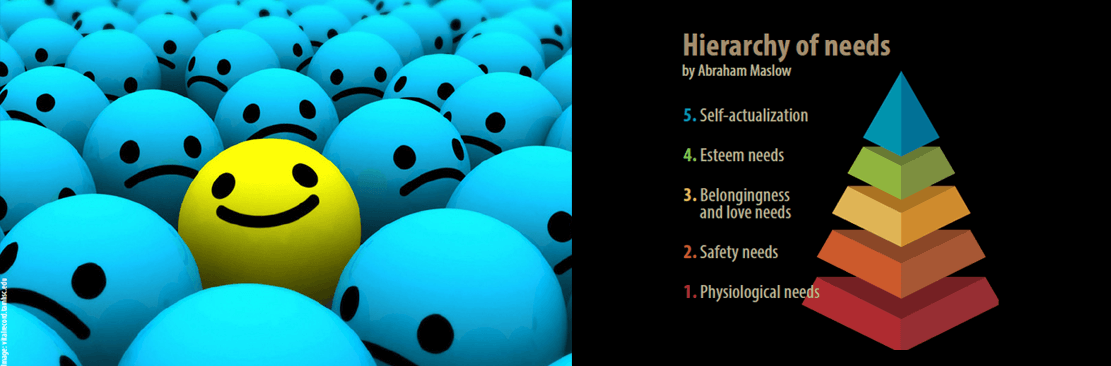
There is an area of Psychology
called Humanist that
provides us with an explanation
of what the life of human
beings is in the search for its
fulfillment.
We have an American Psychologist,
Abraham Maslow
(New York 1908 - California
1970) who did good jobs in
Humanistic Psychology.
Abraham Maslow
PhD Philosophy:
Cornell University
Master Psychology (1931):
University of Wisconsin
PhD Psychology (1934):
University of Wisconsin
He worked with Edward
Thorndike and Alfred Adler
at Columbia University.
According to Maslow the
human being has a tendency
towards the search for mental
health. Maslow explains
this process of the search for
mental health and the realization
of human beings with a
model that is a pyramid.
With this model he explains
his theory of satisfaction of
needs and is called Maslow’s
Pyramid of Needs.
With an unsatisfied level
you can’t reach the next level.
We are born with the level
of basic needs. The basic
needs also have the function
of giving rise to the highest.
In the Maslow model, he
explains that the satisfaction
of the low level is what allows
us to reach the next level.
Physiological: feeding, rest
Security: protection
Social: affection, belonging
Recognition: success, trust
Self-actualization: creativity, spontaneity
We are in the world of marketing,
in the world of a pandemic,
in a world in which
many are very upset and in a
world where States have been
overtaken by the pandemic.
If we approach Maslow’s
theory we can know the following.
Human beings seek mental
health but now almost all governments
bring us in that:
Q We have more infected
Q These 15 days we will have
more severe confinement.
Q We are going to get out
of the pandemic because
we already have vaccines
—there are problems with
vaccines.
Q The economy in a year will
be fine —every day there are
more unemployed.
Q Every day we are further
away from satisfying our
basic needs.
Q When the pandemic wasn’t
here, we had the marketing.
Q You have to have this
product.
Q You have to live in this area.
The pyramid of our lives, for
a long time, we have not been
able to reach the highest level;
every day they give us more
elements to achieve it.
Don’t let governments
and marketing build the
pyramid of realization of
your life. Build your own
pyramid so you can get
where you want.
Forget about the marketing
and the governments
because those are the
levels they want to reach.
Build your levels
of satisfaction
and be happy with them.
BIBLIOGRAPHY. Maslow, A. (2016). El hombre autorrealizado. Hacia
una psicología del Ser. España: Kairos | Maslow, A. y otros. (2005). El
Management según Maslow. Una visión Humanista para la Empresa de
Hoy. España: Paidós
 Experts in child development are
calling on the government to support
a “summer of play” to help pupils
in England recover from the stress of
lockdown and a year of Covid upheaval.
Instead of extra lessons, catch-up
summer schools and longer school
days, they said children should be encouraged
to spend the coming months
outdoors, being physically active and
having fun with their friends.
Psychologists have reported behavioural
changes in some children
following the first lockdown last year.
After months of isolation from friends,
some struggled to share and play
together, teachers reported more fights
and fallings-out, and Ofsted observed
a worrying drop in physical fitness.
As the government draws up its
latest education catch-up plans, to be
unveiled in the coming weeks, a group
of academics calling themselves Play-
FirstUK have written to the education
secretary, Gavin Williamson, appealing
for a new emphasis on play, mental
health and wellbeing as children
emerge from lockdown. “This spring
and summer should not be filled with
extra lessons,” the letter says. “Children,
teachers and parents need time
and space to recover from the stress
that the past year has placed on them.
... It continues: “Social connection and
play offer myriad learning opportunities
...
Read full text:
Experts in child development are
calling on the government to support
a “summer of play” to help pupils
in England recover from the stress of
lockdown and a year of Covid upheaval.
Instead of extra lessons, catch-up
summer schools and longer school
days, they said children should be encouraged
to spend the coming months
outdoors, being physically active and
having fun with their friends.
Psychologists have reported behavioural
changes in some children
following the first lockdown last year.
After months of isolation from friends,
some struggled to share and play
together, teachers reported more fights
and fallings-out, and Ofsted observed
a worrying drop in physical fitness.
As the government draws up its
latest education catch-up plans, to be
unveiled in the coming weeks, a group
of academics calling themselves Play-
FirstUK have written to the education
secretary, Gavin Williamson, appealing
for a new emphasis on play, mental
health and wellbeing as children
emerge from lockdown. “This spring
and summer should not be filled with
extra lessons,” the letter says. “Children,
teachers and parents need time
and space to recover from the stress
that the past year has placed on them.
... It continues: “Social connection and
play offer myriad learning opportunities
...
Read full text:
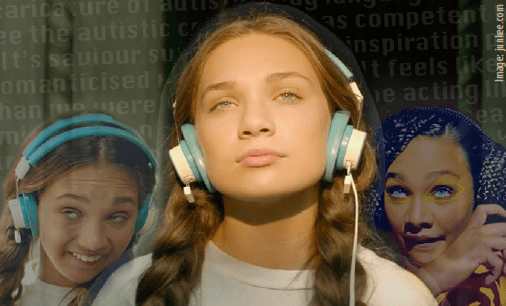 When the trailer for Sia’s ... movie
“Music” was released in November,
she faced intense backlash from
people in the autistic community. ... The
Autisticats, a group of autistic people
... explained: “This performance is a
caricature of autistic body language.
It’s unsettling, and insincere. And it
is deeply reminiscent of the exaggerated
mannerisms non-autistic people
often employ when bullying autistic &
developmentally disabled people for
the ways we move. ... Full text: https://www.
upworthy.com/autistic-reviewers-respond-to-sia-film
In one scene, Zu [Kate Hudson]
is taught how to hold down Music
through prone restraint (face-down to
the ground) when she has a meltdown
in the park. ... prone restraint has led
to a number of deaths in children at
youth homes and schools in real-life,
and is a frowned upon practice in the
community. ... Full text: https://junkee.com/
sia-music-autistic-response/287963
What really got me was how Music
was used as a prop to advance everyone’s
lives but her own. I really don’t
know why the movie is named after
her because so little screen time is
given to her character’s development.
Full text by Niko Boskovic: https://www.ocdd.org/
february-2021-blog-post/
To learn more about autism from actually
autistic people, visit The music
media kit from NeuroClastic people:
https://neuroclastic.com/music/
Read full text:
When the trailer for Sia’s ... movie
“Music” was released in November,
she faced intense backlash from
people in the autistic community. ... The
Autisticats, a group of autistic people
... explained: “This performance is a
caricature of autistic body language.
It’s unsettling, and insincere. And it
is deeply reminiscent of the exaggerated
mannerisms non-autistic people
often employ when bullying autistic &
developmentally disabled people for
the ways we move. ... Full text: https://www.
upworthy.com/autistic-reviewers-respond-to-sia-film
In one scene, Zu [Kate Hudson]
is taught how to hold down Music
through prone restraint (face-down to
the ground) when she has a meltdown
in the park. ... prone restraint has led
to a number of deaths in children at
youth homes and schools in real-life,
and is a frowned upon practice in the
community. ... Full text: https://junkee.com/
sia-music-autistic-response/287963
What really got me was how Music
was used as a prop to advance everyone’s
lives but her own. I really don’t
know why the movie is named after
her because so little screen time is
given to her character’s development.
Full text by Niko Boskovic: https://www.ocdd.org/
february-2021-blog-post/
To learn more about autism from actually
autistic people, visit The music
media kit from NeuroClastic people:
https://neuroclastic.com/music/
Read full text:
 In the basement of a University of
Pennsylvania engineering building,
Mohsen Azadi and his labmates huddled
around a set of blinding LEDs set
beneath an acrylic vacuum chamber.
They stared at the lights, their cameras,
and what they hoped would soon be
some action from the two tiny plastic
plates sitting inside the enclosure. “We
didn’t know what we were expecting to
see,” says Azadi, a mechanical engineering
PhD candidate. “But we hoped
to see something.”
Let’s put it this way: They wanted to
see if those plates would levitate, lofted
solely by the power of light. Lightinduced
flow, or photophoresis, isn’t a
breakthrough on its own. Researchers
have used this physical phenomenon
to float invisible aerosols and sort particles
in microfluidic devices. But they
have never before moved an object
big enough to grasp —much less lifted
anything that can carry objects itself.
And it worked. “When the two
samples lifted,” Azadi says, “there was
this gasp between all of us.” The Mylar
plates, each as wide as a pencil’s diameter,
hovered thanks to nothing but the
energy from the light below, according
to a paper published today in Science
Advances. Energy from the LEDs heats
up the Mylar’s specially-coated underbelly,
energizing air particles under the
plastic and propelling the plates away
with a tiny, but ...
In the basement of a University of
Pennsylvania engineering building,
Mohsen Azadi and his labmates huddled
around a set of blinding LEDs set
beneath an acrylic vacuum chamber.
They stared at the lights, their cameras,
and what they hoped would soon be
some action from the two tiny plastic
plates sitting inside the enclosure. “We
didn’t know what we were expecting to
see,” says Azadi, a mechanical engineering
PhD candidate. “But we hoped
to see something.”
Let’s put it this way: They wanted to
see if those plates would levitate, lofted
solely by the power of light. Lightinduced
flow, or photophoresis, isn’t a
breakthrough on its own. Researchers
have used this physical phenomenon
to float invisible aerosols and sort particles
in microfluidic devices. But they
have never before moved an object
big enough to grasp —much less lifted
anything that can carry objects itself.
And it worked. “When the two
samples lifted,” Azadi says, “there was
this gasp between all of us.” The Mylar
plates, each as wide as a pencil’s diameter,
hovered thanks to nothing but the
energy from the light below, according
to a paper published today in Science
Advances. Energy from the LEDs heats
up the Mylar’s specially-coated underbelly,
energizing air particles under the
plastic and propelling the plates away
with a tiny, but ...
 A shift in Earth’s poles 42,000 years
ago may have drastically altered
the planet’s climate, scientists have
found —and they’re naming the period
[Adams Event] after the author Douglas
Adams. Earth’s magnetic field collapsed.
Ice sheets surged across North
America, Australasia and the Andes.
Wind belts shifted across the Pacific
and Southern Oceans. Prolonged
drought hit Australia; that continent’s
biggest mammals went extinct. Humans
took to caves to make ochre-color
art. Neanderthals died off for good.
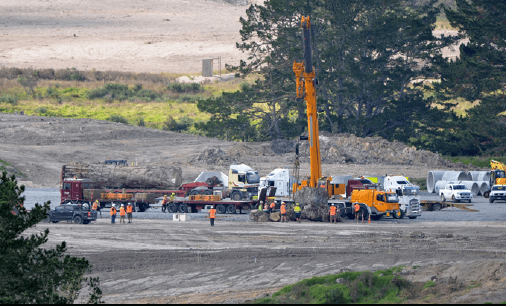
Through it all, one giant kauri tree
stood tall —until, after nearly two millenniums,
it died and fell in a swamp,
where the chemical records embedded
in its flesh were immaculately
preserved. That tree, unearthed a few
years ago near Ngawha Springs in
northern New Zealand, finally allowed
researchers to fit a tight timeline
to what before had seemed like an
intriguing but only vaguely correlated
series of events.
What if, the researchers posited, the
crash of the magnetic field spawned
the climatic changes of that era? And
to think that the Ngawha kauri tree
had borne witness to the whole thing.
“It must have seemed like the end
of days,” said Chris S.M. Turney, a
geoscientist ... part of a large team that
described the findings in a study published
in Science. “And this tree ...
A shift in Earth’s poles 42,000 years
ago may have drastically altered
the planet’s climate, scientists have
found —and they’re naming the period
[Adams Event] after the author Douglas
Adams. Earth’s magnetic field collapsed.
Ice sheets surged across North
America, Australasia and the Andes.
Wind belts shifted across the Pacific
and Southern Oceans. Prolonged
drought hit Australia; that continent’s
biggest mammals went extinct. Humans
took to caves to make ochre-color
art. Neanderthals died off for good.
Through it all, one giant kauri tree
stood tall —until, after nearly two millenniums,
it died and fell in a swamp,
where the chemical records embedded
in its flesh were immaculately
preserved. That tree, unearthed a few
years ago near Ngawha Springs in
northern New Zealand, finally allowed
researchers to fit a tight timeline
to what before had seemed like an
intriguing but only vaguely correlated
series of events.
What if, the researchers posited, the
crash of the magnetic field spawned
the climatic changes of that era? And
to think that the Ngawha kauri tree
had borne witness to the whole thing.
“It must have seemed like the end
of days,” said Chris S.M. Turney, a
geoscientist ... part of a large team that
described the findings in a study published
in Science. “And this tree ...
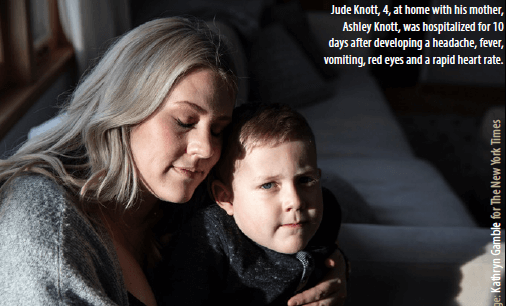 The condition, which usually
emerges several weeks after infection,
is still rare, but can be dangerous.
“A higher percentage of them are really
critically ill,” one doctor said.
Doctors across the country have
been seeing a striking increase in the
number of young people with the condition...
which is called Multisystem
Inflammatory Syndrome in Children
or MIS-C. Even more worrisome, they
say, is that more patients are now
very sick than during the first wave
of cases, which alarmed doctors and
parents around the world last spring.
“We’re now getting more of these
MIS-C kids, but this time, it just seems
that a higher percentage of them are
really critically ill,” said Dr. Roberta
DeBiasi, chief of infectious diseases at
Children’s National Hospital in Washington,
D.C. During the hospital’s first
wave, about half the patients needed
treatment in the intensive care unit,
she said, but now 80 to 90 percent do.
... So far, there’s no evidence that
recent coronavirus variants are
responsible, and experts say it is too
early to speculate about any impact of
variants on the syndrome. The condition
remains rare. The latest numbers
from the CDCP show 2,060 cases in
48 states, Puerto Rico and the District
of Columbia, including 30 deaths.
The median age was 9, but infants to
20-year-olds have been ... Read full text:
Read full text:
The condition, which usually
emerges several weeks after infection,
is still rare, but can be dangerous.
“A higher percentage of them are really
critically ill,” one doctor said.
Doctors across the country have
been seeing a striking increase in the
number of young people with the condition...
which is called Multisystem
Inflammatory Syndrome in Children
or MIS-C. Even more worrisome, they
say, is that more patients are now
very sick than during the first wave
of cases, which alarmed doctors and
parents around the world last spring.
“We’re now getting more of these
MIS-C kids, but this time, it just seems
that a higher percentage of them are
really critically ill,” said Dr. Roberta
DeBiasi, chief of infectious diseases at
Children’s National Hospital in Washington,
D.C. During the hospital’s first
wave, about half the patients needed
treatment in the intensive care unit,
she said, but now 80 to 90 percent do.
... So far, there’s no evidence that
recent coronavirus variants are
responsible, and experts say it is too
early to speculate about any impact of
variants on the syndrome. The condition
remains rare. The latest numbers
from the CDCP show 2,060 cases in
48 states, Puerto Rico and the District
of Columbia, including 30 deaths.
The median age was 9, but infants to
20-year-olds have been ... Read full text:
Read full text:
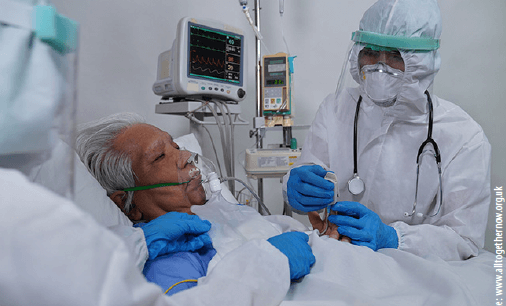 Some 30,296 of the 50,888 deaths
between January and November
2020 were people with a disability,
Office for National Statistics (ONS)
data shows. It also suggests the risk of
death is three times greater for more
severely disabled people. Charities
have called for urgent government
action, describing the data as “horrifying
and tragic”.
The ONS figures suggest disabled
people were disproportionately affected
by the pandemic —accounting
for 17.2% of the study population but
nearly 60% of coronavirus deaths.
Among women, the risk of death
involving coronavirus was 3.5 times
greater for more-disabled women -
defined as having their day-to-day
activities “limited a lot” by their
health —
compared with non-disabled
women. For less-disabled women,
defined as having their day-to-day
activities “limited a little”, the risk was
two times greater. Compared to nondisabled
men, the data showed that
the risk was 3.1 times greater for moredisabled
men, and 1.9 times greater for
less-disabled men.
Looking at people with a medically
diagnosed learning disability, the risk
of death involving Covid was 3.7 times
greater for both men and women compared
with people who did not have
a learning disability. The ONS said an
“important part” of the increased risk
was because disabled people ...
Some 30,296 of the 50,888 deaths
between January and November
2020 were people with a disability,
Office for National Statistics (ONS)
data shows. It also suggests the risk of
death is three times greater for more
severely disabled people. Charities
have called for urgent government
action, describing the data as “horrifying
and tragic”.
The ONS figures suggest disabled
people were disproportionately affected
by the pandemic —accounting
for 17.2% of the study population but
nearly 60% of coronavirus deaths.
Among women, the risk of death
involving coronavirus was 3.5 times
greater for more-disabled women -
defined as having their day-to-day
activities “limited a lot” by their
health —
compared with non-disabled
women. For less-disabled women,
defined as having their day-to-day
activities “limited a little”, the risk was
two times greater. Compared to nondisabled
men, the data showed that
the risk was 3.1 times greater for moredisabled
men, and 1.9 times greater for
less-disabled men.
Looking at people with a medically
diagnosed learning disability, the risk
of death involving Covid was 3.7 times
greater for both men and women compared
with people who did not have
a learning disability. The ONS said an
“important part” of the increased risk
was because disabled people ...
 When some people hear the
words “adaptive clothing,” their
minds may instantly jump to images
of sweatsuits and velcro closures.
But, in actuality, adaptive clothing—
a term used to describe clothing for
people with disabilities and medical
conditions that make getting dressed
challenging—is super chic and stylish
thanks to a handful of designers
who are raising the bar. Because why
should using a wheelchair or medical
device mean you have to sacrifice
style? The following are seven designers
and their adaptive brands:
Izzy Camilleri, IZ Adaptive • Marta
Elena, Abilitee • Sophie Ternest and
Debbie Provoost, So Yes • Marie Pier
Fortin, Mode Ézé Plus • Tommy Hilfiger,
Tommy Adaptive • Heidi McKenzie,
Alter Ur Ego • Tobie Hatfield,
Nike ...
When some people hear the
words “adaptive clothing,” their
minds may instantly jump to images
of sweatsuits and velcro closures.
But, in actuality, adaptive clothing—
a term used to describe clothing for
people with disabilities and medical
conditions that make getting dressed
challenging—is super chic and stylish
thanks to a handful of designers
who are raising the bar. Because why
should using a wheelchair or medical
device mean you have to sacrifice
style? The following are seven designers
and their adaptive brands:
Izzy Camilleri, IZ Adaptive • Marta
Elena, Abilitee • Sophie Ternest and
Debbie Provoost, So Yes • Marie Pier
Fortin, Mode Ézé Plus • Tommy Hilfiger,
Tommy Adaptive • Heidi McKenzie,
Alter Ur Ego • Tobie Hatfield,
Nike ...
 Fashion designer Iris van Herpen
has unveiled a haute couture dress
constructed from ocean plastic fabric
produced by Parley for the Oceans,
which was cut into trilateral pieces
to form a tessellated, translucent
garment. The dress forms part of Van
Herpen’s Roots of Rebirth Spring/
Summer 2021 collection, which referenced
“the intricacy of funghi” and the
interconnectedness of mushrooms and
especially mycelium, the tubular filaments
that funghi use to grow.
Van Herpen used a variety of different
materials when designing the
collection, which consisted entirely
of dresses. For the sixth look on the
catwalk, the Holobiont dress, Van
Herpen used Parley for the Oceans’
trademarked Ocean Plastic fabric. The
material is made from upcycled marine
waste, sourced from the estimated
eight million tons of plastic waste
that end up in our oceans every year.
Parley for the Oceans collects plastic
debris from shores and oceans, which
is shredded and reworked into yarn.
Implementing these kinds of sustainable
and recyclable materials into
the collections is an ongoing development
in her atelier, Van Herpen told
Dezeen. “We do a lot of material development
in-house and we also collaborate
with companies and institutes
globally, like Parley for the Oceans,”
she said. ...
Fashion designer Iris van Herpen
has unveiled a haute couture dress
constructed from ocean plastic fabric
produced by Parley for the Oceans,
which was cut into trilateral pieces
to form a tessellated, translucent
garment. The dress forms part of Van
Herpen’s Roots of Rebirth Spring/
Summer 2021 collection, which referenced
“the intricacy of funghi” and the
interconnectedness of mushrooms and
especially mycelium, the tubular filaments
that funghi use to grow.
Van Herpen used a variety of different
materials when designing the
collection, which consisted entirely
of dresses. For the sixth look on the
catwalk, the Holobiont dress, Van
Herpen used Parley for the Oceans’
trademarked Ocean Plastic fabric. The
material is made from upcycled marine
waste, sourced from the estimated
eight million tons of plastic waste
that end up in our oceans every year.
Parley for the Oceans collects plastic
debris from shores and oceans, which
is shredded and reworked into yarn.
Implementing these kinds of sustainable
and recyclable materials into
the collections is an ongoing development
in her atelier, Van Herpen told
Dezeen. “We do a lot of material development
in-house and we also collaborate
with companies and institutes
globally, like Parley for the Oceans,”
she said. ...
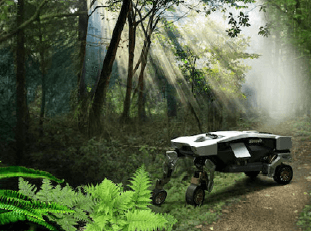 ,
TIGER X-1 [TIGER being short
for Transforming Intelligent Ground
Excursion Robot] has motorized and
bendable limbs to cross over obstacles
in geographic terrains hard to reach by
wheels. Each wheel is attached with a
leg that, upon being confronted with a
difficult area, straightens up or bends
and steps over the obstacle. Sensors
are installed to detect possible complications
or uneven ground.
No driver is needed, as the miniaturized
TIGER X-1 is fully autonomous.
The car thus has the advantage of
being able to carry cargo to “extreme,
remote” terrain. Depending on the
type of location, it can either serve as a
four-wheeled vehicle or “a four-legged
walking machine,” Hyundai describes
in a press release, and its ability to
travel in all directions —whether via
wheels or legs— means it can really go
places. ...
,
TIGER X-1 [TIGER being short
for Transforming Intelligent Ground
Excursion Robot] has motorized and
bendable limbs to cross over obstacles
in geographic terrains hard to reach by
wheels. Each wheel is attached with a
leg that, upon being confronted with a
difficult area, straightens up or bends
and steps over the obstacle. Sensors
are installed to detect possible complications
or uneven ground.
No driver is needed, as the miniaturized
TIGER X-1 is fully autonomous.
The car thus has the advantage of
being able to carry cargo to “extreme,
remote” terrain. Depending on the
type of location, it can either serve as a
four-wheeled vehicle or “a four-legged
walking machine,” Hyundai describes
in a press release, and its ability to
travel in all directions —whether via
wheels or legs— means it can really go
places. ...
 “I think it’s unlikely that any condition
in the body is one where the microbiome
isn’t involved.” That is the considered
opinion of Iain Chapple ... who was,
until 2020, head of dentistry at Birmingham
University, in Britain, and is still an
active researcher in the field. ...
Even a healthy mouth is inhabited
by lots of bugs. Meanwhile, at the other
end of the alimentary canal, the large
intestine contains so many microbes
that they probably outnumber the
cells of the human body. Both bacterial
populations have coevolved with
their hosts for millions of years, so Dr
Chapple is almost certainly right about
the intimate connection between them
and the body. ...
Dr Chapple has been seeking a link
between gum disease and rheumatoid
arthritis. In periodontitis, to give gum
disease its proper name, the number
of bacteria in the crevice between a
tooth and its surroundings rises from
thousands to millions. The gums being
well supplied with blood vessels, such
bacteria can hitch a ride to the rest of
the body. This fact has been linked ...
also with diabetes, Alzheimer’s disease
and, according to Purnima Kumar
of Ohio State University, who helped
to organise the session in question,
over 50 other conditions. ...
“I think it’s unlikely that any condition
in the body is one where the microbiome
isn’t involved.” That is the considered
opinion of Iain Chapple ... who was,
until 2020, head of dentistry at Birmingham
University, in Britain, and is still an
active researcher in the field. ...
Even a healthy mouth is inhabited
by lots of bugs. Meanwhile, at the other
end of the alimentary canal, the large
intestine contains so many microbes
that they probably outnumber the
cells of the human body. Both bacterial
populations have coevolved with
their hosts for millions of years, so Dr
Chapple is almost certainly right about
the intimate connection between them
and the body. ...
Dr Chapple has been seeking a link
between gum disease and rheumatoid
arthritis. In periodontitis, to give gum
disease its proper name, the number
of bacteria in the crevice between a
tooth and its surroundings rises from
thousands to millions. The gums being
well supplied with blood vessels, such
bacteria can hitch a ride to the rest of
the body. This fact has been linked ...
also with diabetes, Alzheimer’s disease
and, according to Purnima Kumar
of Ohio State University, who helped
to organise the session in question,
over 50 other conditions. ...
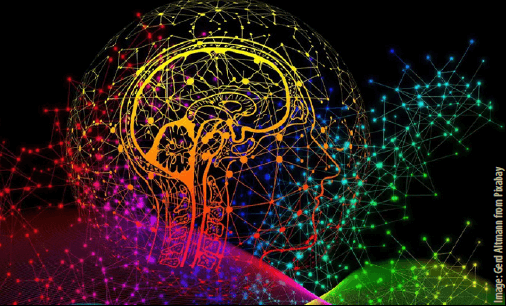 People who tend to experience
mixed feelings are less likely to fall
prey to two common cognitive biases,
according to new research published in
the British Journal of Social Psychology.
The findings indicate that being able
to simultaneously see both the positive
and negative sides of things has some
psychological benefits.
“I think we live in a time where there
is a lot of emphasis on ‘strong’ opinions
and people who are very ‘certain’ about
their stances, leading to division and
polarization,” said author Iris K. Schneider,
a professor of social and economic
cognition at the University of Cologne.
“There seems to be very little room
for the fact that many important issues
are actually multi-faceted, with both positive and negative sides to them. Indeed,
there is a little bit of bias against
being ambivalent because it is seen as
indecisive and uncertain. I believe that
this is not justified and that there are
benefits to being ambivalent because it
provides a broader, more realistic view
of the world.”
In four studies, Schneider and her
colleagues examined the relationship
between ambivalence and two cognitive
biases. Two studies examined correspondence
bias, also known as the
fundamental attribution error, which
describes the tendency to over-emphasize
personality-based rather than
situational ...
People who tend to experience
mixed feelings are less likely to fall
prey to two common cognitive biases,
according to new research published in
the British Journal of Social Psychology.
The findings indicate that being able
to simultaneously see both the positive
and negative sides of things has some
psychological benefits.
“I think we live in a time where there
is a lot of emphasis on ‘strong’ opinions
and people who are very ‘certain’ about
their stances, leading to division and
polarization,” said author Iris K. Schneider,
a professor of social and economic
cognition at the University of Cologne.
“There seems to be very little room
for the fact that many important issues
are actually multi-faceted, with both positive and negative sides to them. Indeed,
there is a little bit of bias against
being ambivalent because it is seen as
indecisive and uncertain. I believe that
this is not justified and that there are
benefits to being ambivalent because it
provides a broader, more realistic view
of the world.”
In four studies, Schneider and her
colleagues examined the relationship
between ambivalence and two cognitive
biases. Two studies examined correspondence
bias, also known as the
fundamental attribution error, which
describes the tendency to over-emphasize
personality-based rather than
situational ...
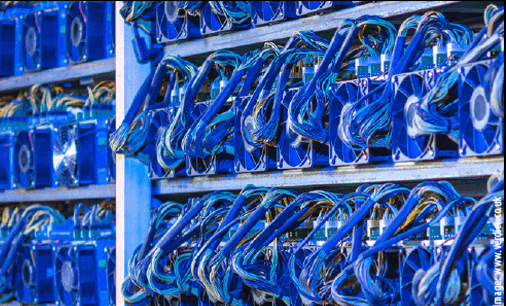 Bitcoin is a digital cryptocurrency
craze that has taken over the internet,
requiring no physical form or bank
to be used, created through a process
called mining. Mining is essentially
using powerful computer components
–particularly graphics cards– to verify
bitcoin transactions, a process that
then creates bitcoins for the user. Due
to a recent surge in the price of Bitcoin,
miners from around the world are
hooking up power-hungry computing
rigs to create the encrypted currency,
which has a limited supply before no
more can be created.
The Cambridge Bitcoin Electricity
Consumption Index was set up to track
the energy draw of this process globally.
It is a “best-guess estimate”, which
is then taken and compared to other
electricity uses to demonstrate the
huge impact of cryptocurrency.
The most recent update suggests ...
Bitcoin now consumes 121.36 terawatthours
worth of electricity every single
year, a number that is higher than Argentina’s
energy consumption and hot
on the heels of Norway. When Bitcoin
is classed as a country, it ranks 30th in
the world, consuming almost 0.5% of
the world’s energy production.
Currently sitting at $47,700, Bitcoin
continues to rise in price. As supply
dwindles, big names ... are investing,
with Tesla purchasing $1.5 billion of
Bitcoin despite critics slamming the
company for the environmental impact
of the transaction. ...
Read full text:
Bitcoin is a digital cryptocurrency
craze that has taken over the internet,
requiring no physical form or bank
to be used, created through a process
called mining. Mining is essentially
using powerful computer components
–particularly graphics cards– to verify
bitcoin transactions, a process that
then creates bitcoins for the user. Due
to a recent surge in the price of Bitcoin,
miners from around the world are
hooking up power-hungry computing
rigs to create the encrypted currency,
which has a limited supply before no
more can be created.
The Cambridge Bitcoin Electricity
Consumption Index was set up to track
the energy draw of this process globally.
It is a “best-guess estimate”, which
is then taken and compared to other
electricity uses to demonstrate the
huge impact of cryptocurrency.
The most recent update suggests ...
Bitcoin now consumes 121.36 terawatthours
worth of electricity every single
year, a number that is higher than Argentina’s
energy consumption and hot
on the heels of Norway. When Bitcoin
is classed as a country, it ranks 30th in
the world, consuming almost 0.5% of
the world’s energy production.
Currently sitting at $47,700, Bitcoin
continues to rise in price. As supply
dwindles, big names ... are investing,
with Tesla purchasing $1.5 billion of
Bitcoin despite critics slamming the
company for the environmental impact
of the transaction. ...
Read full text:
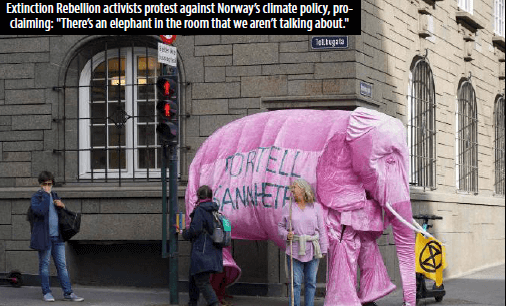 In Oslo, the street lamps are powered
by renewables. To conserve
energy, the smart lights dim when
nobody is around. The Norwegian
capital, like the rest of the country, is
proud of its exceptional green credentials.
Its public transportation system
too is powered entirely by renewable
energy. Two thirds of new cars sold
in the city are electric. There’s even a
highway for bees.
There’s just one problem. Much of
the environmental innovation that
Norway is so proud of is financed by
its oil money. Because Norway, apart
from being a forward-thinking climate
champion, is also a major fossil fuels
exporter. And it plans to keep it that
way for a long time to come.
Norway isn’t the only country
preaching sustainability while simultaneously
cashing in on the very thing
that is causing climate change. The UK
is hosting a major climate summit later
this year. At the same time, it is contemplating
opening a new coal mine.
Canada, a self-proclaimed climate
leader, is pouring tax dollars into a
doomed oil pipeline project.
Many countries produce fossil fuels
despite committing to combat climate
change. But Canada, Norway ...
Read full text
In Oslo, the street lamps are powered
by renewables. To conserve
energy, the smart lights dim when
nobody is around. The Norwegian
capital, like the rest of the country, is
proud of its exceptional green credentials.
Its public transportation system
too is powered entirely by renewable
energy. Two thirds of new cars sold
in the city are electric. There’s even a
highway for bees.
There’s just one problem. Much of
the environmental innovation that
Norway is so proud of is financed by
its oil money. Because Norway, apart
from being a forward-thinking climate
champion, is also a major fossil fuels
exporter. And it plans to keep it that
way for a long time to come.
Norway isn’t the only country
preaching sustainability while simultaneously
cashing in on the very thing
that is causing climate change. The UK
is hosting a major climate summit later
this year. At the same time, it is contemplating
opening a new coal mine.
Canada, a self-proclaimed climate
leader, is pouring tax dollars into a
doomed oil pipeline project.
Many countries produce fossil fuels
despite committing to combat climate
change. But Canada, Norway ...
Read full text
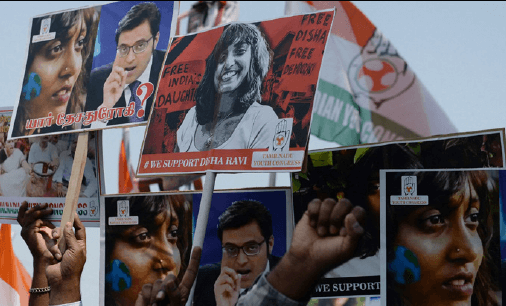 A 22-year-old climate activist has
emerged as a symbol of the Indian
government’s crackdown on dissent as
the country confronts a growing crisis
after months of protests from furious
farmers. Disha Ravi was arrested last
weekend and charged with sedition,
with a Delhi court on Friday granting a
police request to extend her detention
for three more days. Her lawyers say
she was arrested illegally.
Ravi’s arrest prompted protests
throughout the country and renewed
concerns of an authoritarian backlash
to the farmers’ protests that have
rocked the country. She is accused of
helping to create and share an online
“toolkit” that listed peaceful ways the
public could support the protests. The
document was later shared online by
the Swedish climate activist Greta
Thunberg as she joined a litany of
global celebrities leading support for
the movement.
Since November, tens of thousands
of farmers have been camping out in
the capital to protest new agricultural
laws that they say could destroy their
livelihoods and leave them open to
exploitation by large corporations. Ravi
fervently backed the cause, tweeting
her support for the farmers as they pose
a rare and major challenge to Prime
Minister Narendra Modi’s authority.
Farmers are the most influential voting
...
Read full text:
A 22-year-old climate activist has
emerged as a symbol of the Indian
government’s crackdown on dissent as
the country confronts a growing crisis
after months of protests from furious
farmers. Disha Ravi was arrested last
weekend and charged with sedition,
with a Delhi court on Friday granting a
police request to extend her detention
for three more days. Her lawyers say
she was arrested illegally.
Ravi’s arrest prompted protests
throughout the country and renewed
concerns of an authoritarian backlash
to the farmers’ protests that have
rocked the country. She is accused of
helping to create and share an online
“toolkit” that listed peaceful ways the
public could support the protests. The
document was later shared online by
the Swedish climate activist Greta
Thunberg as she joined a litany of
global celebrities leading support for
the movement.
Since November, tens of thousands
of farmers have been camping out in
the capital to protest new agricultural
laws that they say could destroy their
livelihoods and leave them open to
exploitation by large corporations. Ravi
fervently backed the cause, tweeting
her support for the farmers as they pose
a rare and major challenge to Prime
Minister Narendra Modi’s authority.
Farmers are the most influential voting
...
Read full text:
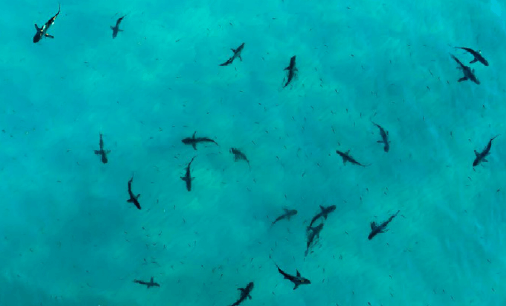 Marine scientists knew sharks
were in trouble, but the results of
a new Nature study show just how grim
things really are. The devastating documents
show a 71% decline of oceanic
shark and ray populations over the past
50 years –and it’s primarily due to
overfishing. The study confirms fears
that high levels of decline in pelagic
sharks and rays are happening on a
worldwide scale.
For all 31 oceanic shark and ray species
assessed in the study, the risk of
extinction has increased substantially
since 1980 and now 75% of them qualify
as threatened with extinction under
the IUCN Red List of Threatened Species
™ criteria. Even more alarmingly, half (16 of 31) of the oceanic shark
and ray species assessed are considered
Critically Endangered. “Oceanic
sharks and rays often suffer most
severely from anthropogenic threats.
Their preferred pelagic habitat is out of
sight and out of mind,” says contributing
author Dr. Andrea Marshall from
the Marine Megafauna Foundation’s
(MMF) “Unregulated or unsustainable
fishing pressure is difficult to control
in international waters, so it is no surprise
that their populations are crashing
globally. To reverse these trends we
will need to figure out how to create ...
Read full text and watch video:
Marine scientists knew sharks
were in trouble, but the results of
a new Nature study show just how grim
things really are. The devastating documents
show a 71% decline of oceanic
shark and ray populations over the past
50 years –and it’s primarily due to
overfishing. The study confirms fears
that high levels of decline in pelagic
sharks and rays are happening on a
worldwide scale.
For all 31 oceanic shark and ray species
assessed in the study, the risk of
extinction has increased substantially
since 1980 and now 75% of them qualify
as threatened with extinction under
the IUCN Red List of Threatened Species
™ criteria. Even more alarmingly, half (16 of 31) of the oceanic shark
and ray species assessed are considered
Critically Endangered. “Oceanic
sharks and rays often suffer most
severely from anthropogenic threats.
Their preferred pelagic habitat is out of
sight and out of mind,” says contributing
author Dr. Andrea Marshall from
the Marine Megafauna Foundation’s
(MMF) “Unregulated or unsustainable
fishing pressure is difficult to control
in international waters, so it is no surprise
that their populations are crashing
globally. To reverse these trends we
will need to figure out how to create ...
Read full text and watch video:
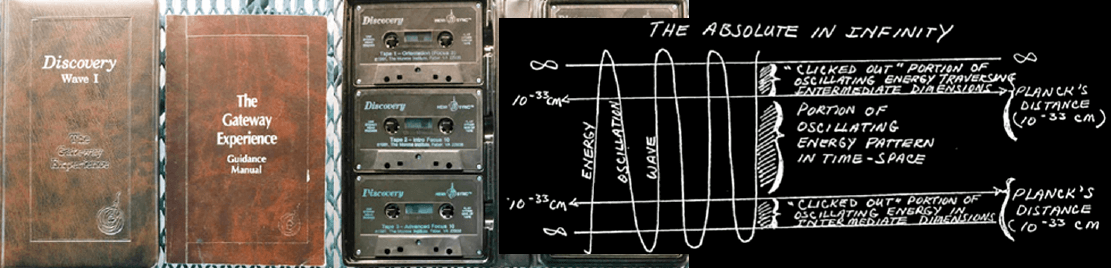
 Issey Miyake’s signature
design bags printed with the MoMA logo rendered in
a bold graphic derived from Katakana. The cords allow you
to adjust the height of the bag. store.moma.org
Issey Miyake’s signature
design bags printed with the MoMA logo rendered in
a bold graphic derived from Katakana. The cords allow you
to adjust the height of the bag. store.moma.org
 A minimalist design for your bathroom, this
metal holder includes a thoughtfully incorporated
shelf that’s perfect for a small plant
or a scented candle. store.moma.org
A minimalist design for your bathroom, this
metal holder includes a thoughtfully incorporated
shelf that’s perfect for a small plant
or a scented candle. store.moma.org

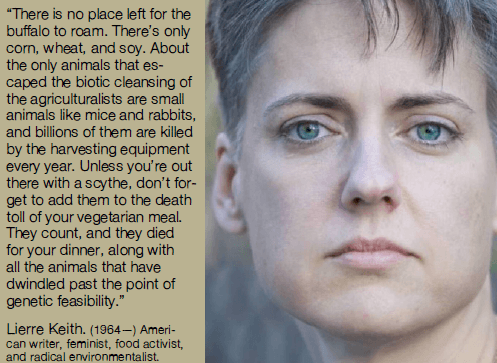 “There is no place left for the
buffalo to roam. There’s only
corn, wheat, and soy. About
the only animals that escaped
the biotic cleansing of
the agriculturalists are small
animals like mice and rabbits,
and billions of them are killed
by the harvesting equipment
every year. Unless you’re out
there with a scythe, don’t forget
to add them to the death
toll of your vegetarian meal.
They count, and they died
for your dinner, along with
all the animals that have
dwindled past the point of
genetic feasibility.”
“There is no place left for the
buffalo to roam. There’s only
corn, wheat, and soy. About
the only animals that escaped
the biotic cleansing of
the agriculturalists are small
animals like mice and rabbits,
and billions of them are killed
by the harvesting equipment
every year. Unless you’re out
there with a scythe, don’t forget
to add them to the death
toll of your vegetarian meal.
They count, and they died
for your dinner, along with
all the animals that have
dwindled past the point of
genetic feasibility.” The Bachelor of Music (BA) program
help students develop an
aptitude and self confidence while
building the real-life skills needed to
succeed as a professional musician
by providing a strong foundation in
music fundamentals, including harmony,
sight reading, and repertoire.
The Bachelor of Music (BA) program
is offered online via distance learning.
After evaluating both academic record
and life experience, AIU staff working
in conjunction with Faculty and
Academic Advisors will assist students
in setting up a custom-made program,
designed on an individual basis. This
flexibility to meet student needs is seldom
found in other distance learning
programs. Our online program does
not require all students to take the
same subjects/courses, use the same
books, or learning materials. Instead,
the online Bachelor of Music (BA)
curriculum is designed individually
by the student and academic advisor.
It specifically addresses strengths and
weaknesses with respect to market opportunities
in the student’s major and
intended field of work. Understanding
that industry and geographic factors
should influence the content of the
curriculum instead of a standardized
one-fits-all design is the hallmark of
AIU’s unique approach to adult education.
This philosophy addresses the
dynamic and constantly changing environment
of working professionals by
helping adult students in reaching their
professional and personal goals within
the scope of the degree program.
The Bachelor of Music (BA) program
help students develop an
aptitude and self confidence while
building the real-life skills needed to
succeed as a professional musician
by providing a strong foundation in
music fundamentals, including harmony,
sight reading, and repertoire.
The Bachelor of Music (BA) program
is offered online via distance learning.
After evaluating both academic record
and life experience, AIU staff working
in conjunction with Faculty and
Academic Advisors will assist students
in setting up a custom-made program,
designed on an individual basis. This
flexibility to meet student needs is seldom
found in other distance learning
programs. Our online program does
not require all students to take the
same subjects/courses, use the same
books, or learning materials. Instead,
the online Bachelor of Music (BA)
curriculum is designed individually
by the student and academic advisor.
It specifically addresses strengths and
weaknesses with respect to market opportunities
in the student’s major and
intended field of work. Understanding
that industry and geographic factors
should influence the content of the
curriculum instead of a standardized
one-fits-all design is the hallmark of
AIU’s unique approach to adult education.
This philosophy addresses the
dynamic and constantly changing environment
of working professionals by
helping adult students in reaching their
professional and personal goals within
the scope of the degree program.
 Atlantic International University is accredited by the Accreditation Service for International
Schools, Colleges and Universities (ASIC). ASIC Accreditation is an internationally
renowned quality standard for colleges and universities. Visit ASIC’s Directory of Accredited
Colleges and Universities. ASIC is a member of CHEA International Quality Group
(CIQG) in the USA, an approved accreditation body by the Ministerial Department of the Home Office
in the UK, and is listed in the International Directory of the Council for Higher Education Accreditation
(CHEA). The University is based in the United States and was established by corporate charter in 1998.
Atlantic International University is accredited by the Accreditation Service for International
Schools, Colleges and Universities (ASIC). ASIC Accreditation is an internationally
renowned quality standard for colleges and universities. Visit ASIC’s Directory of Accredited
Colleges and Universities. ASIC is a member of CHEA International Quality Group
(CIQG) in the USA, an approved accreditation body by the Ministerial Department of the Home Office
in the UK, and is listed in the International Directory of the Council for Higher Education Accreditation
(CHEA). The University is based in the United States and was established by corporate charter in 1998.
 In some cases, accredited colleges
may not accept for transfer courses and degrees
completed at unaccredited colleges, and some
employers may require an accredited degree as
a basis for eligibility for employment. Potential
students should consider how the above may affect
their interests, AIU respects the unique rules and
regulations of each country and does not seek to
influence the respective authorities. In the event
that a prospective student wishes to carry out any
government review or process in regards to his
university degree, we recommend that the requirements
of such are explored in detail with the relevant
authorities by the prospective student as the
university does not intervene in such processes.
AIU students can be found in over 180 countries,
they actively participate and volunteer
in their communities as part of their academic
program and have allocated thousands of service
hours to diverse causes and initiatives. AIU
programs follow the standards commonly used by
colleges and universities in the United States with
regards to the following: academic program
structure, degree issued, transcript, and
other graduation documents.
AIU graduation documents can include
an apostille and authentication from the
US Department of State to facilitate their
use internationally.
In some cases, accredited colleges
may not accept for transfer courses and degrees
completed at unaccredited colleges, and some
employers may require an accredited degree as
a basis for eligibility for employment. Potential
students should consider how the above may affect
their interests, AIU respects the unique rules and
regulations of each country and does not seek to
influence the respective authorities. In the event
that a prospective student wishes to carry out any
government review or process in regards to his
university degree, we recommend that the requirements
of such are explored in detail with the relevant
authorities by the prospective student as the
university does not intervene in such processes.
AIU students can be found in over 180 countries,
they actively participate and volunteer
in their communities as part of their academic
program and have allocated thousands of service
hours to diverse causes and initiatives. AIU
programs follow the standards commonly used by
colleges and universities in the United States with
regards to the following: academic program
structure, degree issued, transcript, and
other graduation documents.
AIU graduation documents can include
an apostille and authentication from the
US Department of State to facilitate their
use internationally.
| Dr. Franklin Valcin President/Academic Dean |
Dr. José Mercado Chief Executive Officer Chairman of the Board of Trustees |
Ricardo González, PhD Provost |
| Dr. Ricardo Gonzalez Chief Operation Officer and MKT Director |
Linda Collazo Logistics Coordinator |
Dr. Silvia Restorff Academic Advisor |
| Dr. Miriam Garibaldi Viceprovost for Research |
Irina Ivashuk Alumni Association Coordinator |
Dr. Prakash Menon Academic Advisor |
| Dr. Ofelia Miller Director of AIU |
Clara Margalef Director of Special Projects of AIU |
Carlos Aponte Telecommunications Coordinator |
| Juan Pablo Moreno Director of Operations |
David Jung Corporate/Legal Counsel |
Dr. Nilani Ljunggren De Silva Academic Advisor |
| Paula Viera Director of Intelligence Systems |
Bruce Kim Advisor/Consultant |
Dr. Scott Wilson Academic Advisor |
| Felipe Gomez Design Director / IT Supervisor |
Thomas Kim Corporate/ Accounting Counsel |
Dr. Mohammad Shaidul Islam Academic Advisor |
| Daritza Ysla IT Coordinator |
Camila Correa Quality Assurance Coordinator |
Dr. Edgar Colon Academic Advisor |
| Nadeem Awan Chief Programming Officer |
Maricela Esparza Administrative Coordinator |
Deborah Rodriguez Academic Tutor Coordinator |
| Dr. Jack Rosenzweig Dean of Academic Affairs |
Chris Benjamin IT and Hosting Support |
Cyndy Dominguez Academic Tutor Coordinator |
| Dr. Edward Lambert Academic Director |
Mayra Bolivar Accounting Coordinator |
Kinmberly Diaz Admissions Support Tutor |
| Dr. Ariadna Romero Advisor Coordinator |
Roberto Aldrett Communications Coordinator |
Amalia Aldrett Admissions Coordinator |
| Nadia Gabaldon Academic Coordinator |
Giovanni Castillo IT Support |
Sandra Garcia Admissions Coordinator |
| Jhanzaib Awan Senior Programmer |
Jaime Rotlewicz Dean of Admissions |
Jose Neuhaus Admissions Support |
| Leonardo Salas Human Resource Manager |
Dr. Mario Rios Academic Advisor |
Junko Shimizu Admissions Coordinator |
| Benjamin Joseph IT and Technology Support |
Michael Phillips Registrar’s Office |
Veronica Amuz Admissions Coordinator |
| Rosie Perez Finance Coordinator |
Rene Cordon Admissions Support |
Alba Ochoa Admissions Coordinator |
| Chris Soto Admissions Counselor |
Jenis Garcia Admissions Counselor |
|
 The School of Business and Economics
allows aspiring and practicing
professionals, managers, and entrepreneurs
in the private and public sectors
to complete a self paced distance
learning degree program of the highest
academic standard.
The ultimate goal is to empower
learners and help them take advantage
of the enormous array of resources
from the world environment in order
to eliminate the current continuum of
poverty and limitations.
Degree programs are designed for
those students whose professional experience has been in business,
marketing, administration, economics,
finance and management.
The School of Business and Economics
allows aspiring and practicing
professionals, managers, and entrepreneurs
in the private and public sectors
to complete a self paced distance
learning degree program of the highest
academic standard.
The ultimate goal is to empower
learners and help them take advantage
of the enormous array of resources
from the world environment in order
to eliminate the current continuum of
poverty and limitations.
Degree programs are designed for
those students whose professional experience has been in business,
marketing, administration, economics,
finance and management.
 The School of Social and Human Studies
is focused on to the development of
studies which instill a core commitment
to building a society based on social and
economic justice and enhancing opportunities
for human well being.
The founding principles lie on the
basic right of education as outlined
in the Declaration of Human Rights.
We instill in our students a sense of
confidence and self reliance in their
ability to access the vast opportunities
available through information channels,
the world wide web, private, public,
nonprofit, and nongovernmental organizations in an ever expanding
global community.
Degree programs are aimed towards
those whose professional life has been
related to social and human behavior,
with the arts, or with cultural studies.
The School of Social and Human Studies
is focused on to the development of
studies which instill a core commitment
to building a society based on social and
economic justice and enhancing opportunities
for human well being.
The founding principles lie on the
basic right of education as outlined
in the Declaration of Human Rights.
We instill in our students a sense of
confidence and self reliance in their
ability to access the vast opportunities
available through information channels,
the world wide web, private, public,
nonprofit, and nongovernmental organizations in an ever expanding
global community.
Degree programs are aimed towards
those whose professional life has been
related to social and human behavior,
with the arts, or with cultural studies.
 The School of Science and Engineering
seeks to provide dynamic, integrated,
and challenging degree programs
designed for those whose experience
is in industrial research, scientific production,
engineering and the general
sciences. Our system for research and
education will keep us apace with the
twenty-first century reach scientific
advance in an environmentally and
ecologically responsible manner to allow
for the sustainability of the human
population. We will foster among our
students a demand for ethical behavior,
an appreciation for diversity, an understanding
of scientific investigation, knowledge of design innovation, a
critical appreciation for the importance
of technology and technological change
for the advancement of humanity.
The School of Science and Engineering
seeks to provide dynamic, integrated,
and challenging degree programs
designed for those whose experience
is in industrial research, scientific production,
engineering and the general
sciences. Our system for research and
education will keep us apace with the
twenty-first century reach scientific
advance in an environmentally and
ecologically responsible manner to allow
for the sustainability of the human
population. We will foster among our
students a demand for ethical behavior,
an appreciation for diversity, an understanding
of scientific investigation, knowledge of design innovation, a
critical appreciation for the importance
of technology and technological change
for the advancement of humanity.
 With access to a global catalog created and maintained collectively by more than
9,000 participating institutions, AIU students have secured excellent research
tools for their study programs.
With access to a global catalog created and maintained collectively by more than
9,000 participating institutions, AIU students have secured excellent research
tools for their study programs.